
The Estimate Follow-Up Gap: Why Home Services Lose Jobs🔗
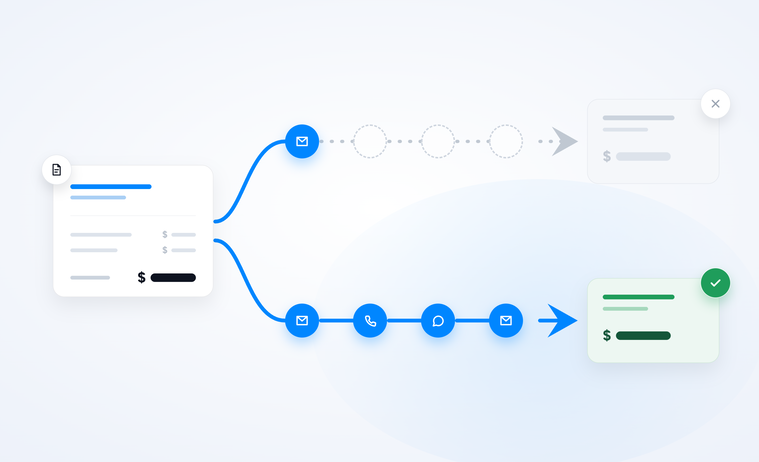
If your close rate feels inconsistent even though your lead volume hasn't changed, the problem is probably follow-up, not marketing. Look at what happens after the estimate goes out.
According to ServiceTitan's own analysis of sales follow-up behavior, only 37% of estimates close on the first visit. 64% of customers say "no" four times before they say "yes." That means the majority of a home service company's revenue depends on what happens in the days and weeks after the first conversation, not the conversation itself. Most contractors aren't built to execute that part consistently, and the jobs that get lost there were never a lead generation problem to begin with. They were already won, and then quietly let go.
Why the first visit rarely closes the job🔗
Home service sales don't usually end in a yes or a no on the spot. A homeowner wants to compare a second quote, check a budget, or simply sit with a large purchase for a few days. That's normal buying behavior, not resistance.
What separates the businesses that convert that hesitation from the ones that lose it is what happens next. ServiceTitan's own data shows a familiar and expensive pattern behind that 64% figure. A large share of sales professionals never follow up on an unclosed estimate at all. Most who do follow up stop after a single attempt, even though the typical customer needs several touches before deciding. Teams routinely spend $200, and in some cases up to $3,000, to generate a single lead. Letting that estimate go cold after one follow-up attempt means walking away from a sale you already paid to create.
Why follow-up is the first task a lean team drops🔗
This is a staffing math problem more than a discipline problem. In a company with a handful of sales and service employees, everyone does more than one job. Follow-up loses to whatever is directly in front of a paying customer right now.
Dane Boulter, Director of Technology and Finance at Lowry Doors, a family-operated garage door company in Utah, described this tradeoff plainly in a conversation on the AI in Trades Podcast:
"Everybody that works for us wears lots of hats... We all have good intentions of doing certain things like marketing, like following up. And it's just not high priority because we also need to take care of the customer. Do I put off taking care of a customer and go work on marketing for a little bit, or... This customer's already paying, why am I putting a paying customer off to go try to get other customers?"
That's a reasonable decision made one call at a time. But made consistently, across every sales rep and every week, it adds up to a company that is generating estimates faster than it can ever circle back on them.
The true cost of a missed follow-up🔗
The Pied Piper Management Lead Handling Effectiveness study evaluated 31 major home services brands across 3,211 customer interactions between October 2025 and January 2026. It put a number on what this looks like from the customer's side. Precision Garage Door ranked first in the study for lead handling effectiveness. That stands out in an industry where companies often struggle with the basics. Cameron O'Hagan, the study's VP of Metrics and Analytics, put it directly. Companies "fail to answer the phone or follow up promptly, and customers commit to another provider" before anyone at the company realizes the opportunity is gone.
Boulter's own experience shows what's sitting on the other side of that gap. Lowry Doors hadn't been running any real follow-up or marketing spend, relying instead on a couple of sales reps who were already maxed out on daily calls. When automated follow-up got switched on as part of a broader ServiceTitan rollout, it surfaced deals the company didn't know it was missing:
"We had a couple pretty high-paying jobs that came out of it as an automated follow-up feature... It turned stuff on and, here all of a sudden we're getting phone calls for $10,000 jobs, out of nowhere."
Those jobs weren't new demand, just estimates that had already been given, from customers who had already been contacted once. They sat untouched until something followed up a second and third time.
The speed problem hiding inside the follow-up problem🔗
Timing determines whether a follow-up contact actually counts, not just whether you make contact again.
The Lead Response Management study, conducted by Dr. James Oldroyd at MIT Sloan with InsideSales.com, remains the most cited research on this question nearly two decades later. It analyzed over 15,000 leads and 100,000 call attempts across six companies. The study found that the odds of qualifying a lead drop 21-fold when response time stretches from 5 minutes to 30. Contact rates fall more than tenfold within just the first hour after a lead comes in.
That pattern holds on the customer-facing side too. Yelp's own data shows customers are twice as likely to respond when a business replies within an hour of a job request. A follow-up sequence that technically exists but runs on a weekly batch, or waits for whoever has a free afternoon, is still too slow. It competes against a customer's shrinking attention span and every other contractor already in their inbox.
The build-vs-automate math🔗
For most contractors, automation is the more realistic choice than building an in-house follow-up process from scratch. The volume of follow-up needed rarely justifies a dedicated hire until a company reaches meaningful scale.
Boulter framed the economics of that decision directly:
"Even the most expensive AI is $30,000-$40,000 a year, still less than the $60,000-$50,000 a year salary that I would have to pay [to hire someone for the job]."
That comparison holds for a company Lowry Doors' size, where automation is filling a role that was never staffed rather than displacing a person doing the job well. It shifts as a company grows. A larger operation eventually needs both someone to own follow-up strategy and the automation to handle the volume a growing customer base generates. For most small and mid-size contractors, though, the realistic starting point is closing the gap with tooling before it's closed with headcount.
Turning follow-up into operational discipline🔗
The mistake that undoes a lot of automated follow-up is treating it as something you turn on once and forget. Boulter described the better version of that habit:
"I can take a day, set up the marketing campaign, set up the follow-up stuff, and then just let that run until I decide to change it again... Come back and check on it once a week or once a month as it comes on."
That's the difference between follow-up as an owned process and follow-up as a feature nobody's watching. It still needs a scheduled review, a person accountable for the sequences and the numbers they produce, and a plan for updating it as pricing, promotions, or services change. Automation that's misconfigured fails just as quietly as a sales rep who never made the second call. It just fails at a larger scale.
How TitanSigma helps close the follow-up gap🔗
Automated follow-up is only as good as the data behind it. A sequence built to catch unclosed estimates, lapsed customers, or overdue invoices needs a current, accurate view of job status, estimate history, and customer records. For most contractors, that view is scattered across ServiceTitan and whatever else runs alongside it. It's often stitched together through manual data exports that go stale the moment they're pulled.
TitanSigma connects directly to ServiceTitan as a native partner and exposes every endpoint as a queryable data layer. That lets you identify unclosed estimates, flag customers who haven't been contacted in a set window, and build the lists that feed a follow-up sequence. You get that without a manual export or a report someone has to remember to run. It also joins that data with the other systems a follow-up process depends on. That lets a sales manager see which estimates are aging out and which reps are following up. It also shows whether a follow-up campaign is actually recovering the jobs it's supposed to, all from a single view.
For contractors ready to close the follow-up gap, the missing piece is usually consistent visibility into which estimates are going cold.
Book a demo to see TitanSigma in action.
This is the first post in a three-part series on where AI actually earns its keep in home service operations. It's informed by a conversation with Dane Boulter of Lowry Doors on the AI in Trades Podcast. The second post examines what happens once a technician is on-site, and how conversation coaching affects whether a recovered job closes at all.